Hair Extensions for Fine or Thin Hair: What to Consider Before You Book
By Esther Alexander
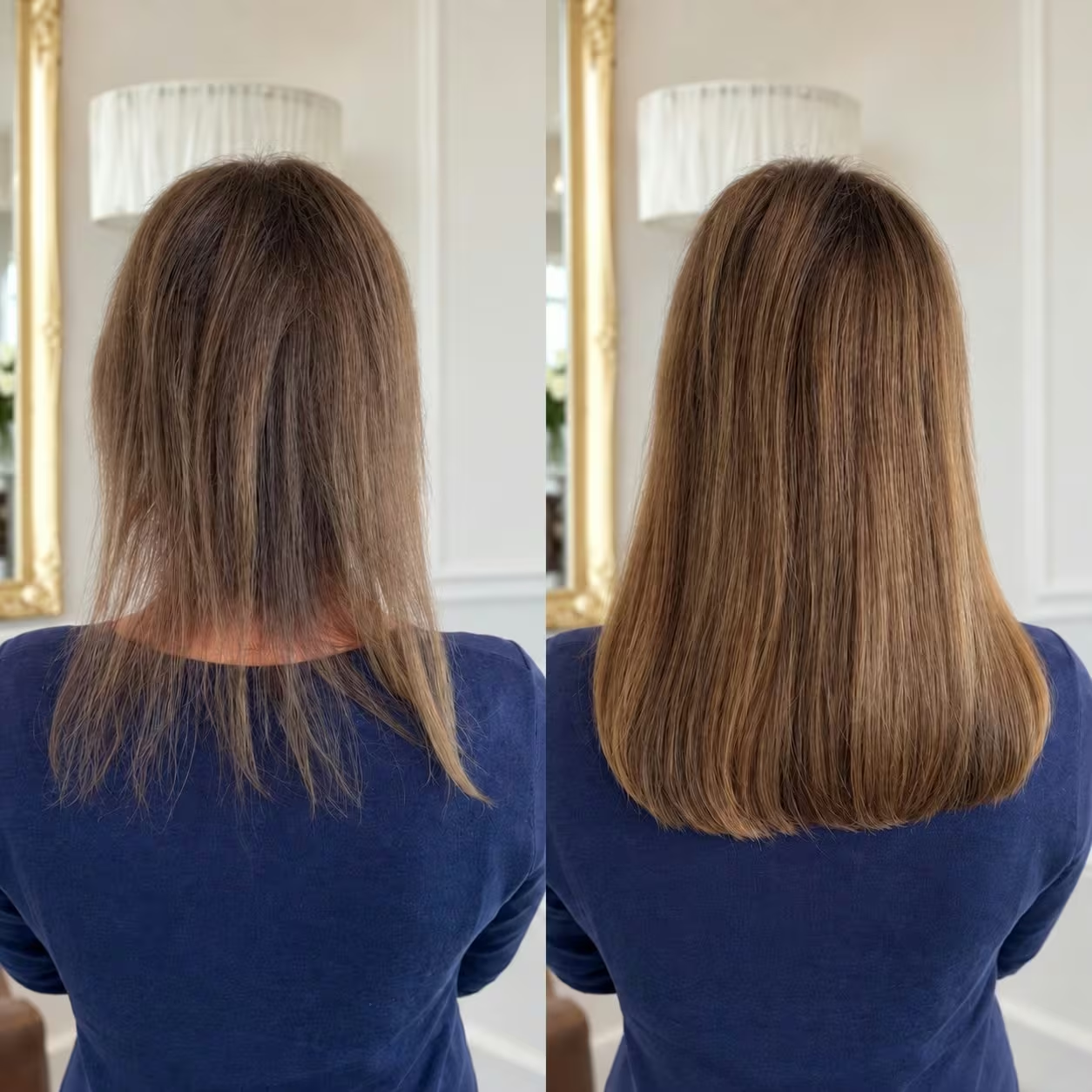
You may be happy with your hair's length but wish the ends looked fuller. Perhaps the sides feel sparse, or the shape loses substance when you wear it down.
Extensions can sometimes help create that fuller appearance. The important question is whether your own hair can support a suitable fitting, with enough coverage and a maintenance routine you can manage.
If you are searching for the best extensions for fine or thin hair, start with that assessment rather than choosing a method from its name.
Are Fine Hair and Thin Hair the Same Thing?
People often use the words interchangeably, but they can describe different concerns. Fine usually refers to the individual strands. Thin often describes lower overall density.
You can have fine strands and plenty of hair, or hair that feels less dense in particular areas. Tell your stylist what you notice rather than feeling you need to diagnose it yourself.
For fitting, the practical questions include the condition of your natural hair, where you want more fullness, how much coverage is available and what you can comfortably maintain.
Our Extensions for Fine Hair service page explains how we approach that consultation at Esther Alexander.
Can Extensions Add Fullness Without Making My Hair Much Longer?
Yes, that can be the goal. A fuller perimeter, more substance through the sides or better balance around the face may matter more to you than extra inches.
Be specific about the change you want. “I want my ends to look fuller at this length” is a different brief from “I want long hair.”
The amount added should follow the assessment and agreed result. A package allowance is not a reason to fit more hair than your own hair can support.
Bring a photograph of your hair on an ordinary day, as well as any inspiration pictures. Both help explain what you would like to change.
Which Extension Method Is Best for Fine Hair?
There is no single method that is right for everyone with fine hair.
Tape, nano and weft systems differ in how the hair is attached and distributed. Your stylist needs to consider your natural density, condition, coverage, the amount being added and how you wear your hair.
A small attachment does not, by itself, establish suitability. The placement and overall fitting plan matter too.
Ask why a particular method is being recommended for you. Our nano, tape and weft guide gives an overview of the differences, so you can have that conversation with more confidence.
Will the Attachments Show When I Wear My Hair Up?
Tell your stylist if a ponytail, bun or clipped-back style is part of your routine. Bring an example or demonstrate how you normally put your hair up.
The fitting needs enough natural hair to cover the attachments in the styles you want to wear. A result photographed with the hair down does not answer every question about an updo or a very fine hairline.
Ask what is realistic for your coverage and whether you will need to adapt any everyday styles. We cannot promise that attachments will be invisible in every position.
What If My Hair Is Too Fine or Fragile for Extensions?
A consultation may end with a recommendation to wait, change the plan or choose a different approach.
Extensions are not suitable for everyone and are not risk-free. Repeated pulling can damage natural hair. If a fitting hurts or feels too tight, contact your stylist promptly rather than accepting discomfort as part of the service.
If you have new or unexplained thinning, patches of hair loss or a sore scalp, seek advice from your GP or a qualified dermatologist before considering a fitting. An extension consultation cannot diagnose or treat hair loss.
Where extensions are unsuitable, you can still discuss the shape, length and styling of your own hair through our Cutting & Styling service.
How Much Care Will I Need to Do at Home?
Extensions add a care commitment as well as hair.
Before proceeding, ask your stylist to explain washing, brushing, drying, sleeping and heat styling for the method and hair selected. Mention swimming, regular gym sessions, holidays and anything else that may affect your routine.
Follow the guidance for the actual products and fitting supplied. There is no benefit in following a generic routine that conflicts with your stylist's method-specific advice.
Maintenance appointments also need to fit your diary and budget. Ask when you should return, what those appointments cover and how to contact the salon if something feels wrong.
What Will Extensions for Fine Hair Cost?
At Esther Alexander, the Volume Collection is £397 for suitable plans using 12–16 inch professional hair, up to 80g, with colour matching, fitting, blending, cutting and finished styling.
That limit does not mean everyone with fine hair should have 80g fitted. Your recommendation may involve less hair, a different quotation or no fitting.
Ongoing maintenance and retail aftercare products are separate. Our extension cost guide explains how to compare the first appointment with the longer-term commitment.
What Should I Bring to My Consultation?
Bring an idea of the change you want, your usual styling routine and a comfortable budget for fitting and upkeep.
It also helps to explain previous extension use, recent colour or chemical services, any sensitivity to attachment materials and any concerns about your scalp or hair.
At Esther Alexander in Ewell, near Epsom, we assess your natural hair before recommending a plan. Extension consultations require a £5 refundable deposit, with no obligation to book a fitting.
Tell us where you would like more fullness.
A Few More Questions About Fine-Hair Extensions
Will Extensions Make My Own Hair Grow Thicker?
Extensions add hair to change the appearance of the style. They do not treat the cause of thinning or make your natural hair grow thicker.
Can I Have Just a Small Amount Added?
That may be possible, subject to suitability, coverage and the result you want. The recommendation should follow an assessment rather than a fixed amount chosen in advance.
Do I Need to Decide on the Day?
No. Use the consultation to understand the recommendation, limitations, cost and care involved before deciding whether to proceed.